Air pollution, epidemics, allergy types that reduce quality of life and can reach dangerous levels... To minimize these harmful components in the ambient air that directly enter our bodies through the respiratory tract, we install air purifiers in our homes and workplaces. So, how do we know if air purifiers really clean our air? Should we believe the illuminated indicators on many of these devices that claim to show air quality? Should we believe the promotional materials from the manufacturer that state the device cleans the air? As consumers, is there a way to understand the extent of hygiene provided by air purifiers with more scientific and fact-based data?
The only way to find out if air purifiers deliver the cleanliness they promise is to examine the device's accredited reports. In this article, we will examine the accredited report of the Sterilisa Air Purifier Disinfection Device as an example and determine whether the device provides disinfection as it claims.
NOTE: Air purification relies on the removal of 3 different types of pollutants (physical pollutants, chemical pollutants, and biological pollutants) from the air. The accredited report we examine in this article is an accredited report showing the microbiological effectiveness of the Sterilisa Air Purifier Disinfection Device, which removes pollution caused by microorganisms, a significant portion of biological pollutants. If an air purifier claims to remove bacteria, viruses, and other microorganisms from the air, it must have an accredited report containing microbiological analyses, similar to the accredited report examined below.
ATTENTION: Particle removal and microorganism (bacteria, viruses, and others) removal are different types of pollutant removal. The fact that a device removes particles does not mean that the same device will also remove pathogenic microorganisms from the air. We recommend reading our blog post titled "Features to Consider When Buying an Air Purifier," which provides a detailed examination of types of air pollutants, features that air purifiers should have for their removal, common misconceptions about air purifiers and filters, and similar topics.
1- Accredited Report Review
Step 1: Finding the Accreditation Number
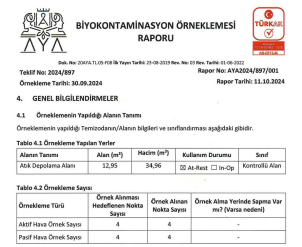
Open the accredited report and find the accreditation number of the laboratory that prepared the report, as highlighted in the report below. The accreditation number of a laboratory indicates which analyses the laboratory is accredited for, and the validity of this number should be checked on the official website of the accrediting institution (e.g., TÜRKAK).
Laboratory's

Accreditation No
Step 2: Checking the Accreditation No
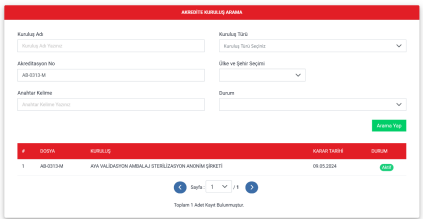
Go to the official website of the institution that accredited the laboratory and access the accredited organization search page. Enter the laboratory's accreditation number into the relevant box and perform a search. If the laboratory that prepared the report appears when we search, it means the accreditation number is valid.
You can access the TÜRKAK Accredited Organization Search Page via the following link: https://asist.turkak.org.tr/tr/accreditation/accreditationagencysearch
The laboratory's accreditation number

is entered into this box and searched.
AB-0313-M
Step 3: Finding the Accreditation Certificate
After checking the accreditation number of the laboratory that prepared the report, find the laboratory's accreditation certificate and examine the scope of accreditation to determine if it is accredited for the analysis in the report. The certificate showing the laboratory's scope of accreditation appears with an image like the one below when searched with the accreditation number. After searching, as shown in the image below, click on the marked area to access the laboratory's accreditation certificate and view the file by previewing it.

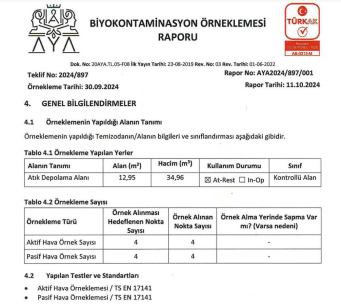
From the laboratory's accreditation certificate, check if it is accredited for the analysis method stated in the analysis report. To do this, open the analysis report and find the analysis method/standard, as shown in the report below. Check if the found analysis method is present in the accreditation file.
ANALYSIS REPORT
LABORATORY'S ACCREDITATION CERTIFICATE
Step 5: Verification with QR Code
Check if the report has been tampered with by scanning the QR code on the report. If there is no QR code on the report, its authenticity should be checked by contacting the laboratory.
Step 6: Finding Analysis Volume and Duration
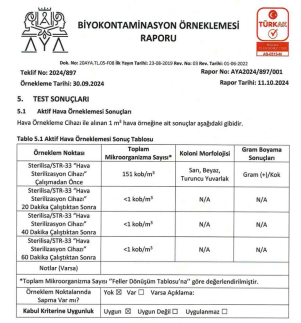
Read the accredited report to find the volume of the analyzed environment and the duration of the analysis. For example, the report below shows that the Sterilisa Air Purifier Disinfection Device disinfected a 34.96 m3 room by 99.999% in 20 minutes.