The World Health Organization (WHO) and many health organizations state that we should frequently disinfect surfaces we come into contact with to avoid contracting diseases from them. In our homes, schools, hospitals, workplaces, and social lives, we use various liquid surface disinfectants and electronic surface disinfection devices to neutralize bacteria, viruses, and other pathogenic microorganisms on surfaces, i.e., to disinfect surfaces. Both disinfection methods, when used correctly, effectively eliminate microorganisms on surfaces and make the surfaces we touch safe.
To correctly use a surface disinfectant, the disinfectant's instructions for use and accredited report must be carefully examined. Otherwise, the surface disinfection process may be incomplete and insufficient, and more importantly, the surface disinfection process can lead to injuries and health hazards. Below, we have answered the questions "How to examine the instructions for use and accredited report of a surface disinfectant?" and "How to use a surface disinfectant correctly in accordance with these documents?" for you.
-
Examination of Instructions for Use
As with all products, incorrect use of surface disinfectant products can lead to injuries and health hazards. Therefore, before using a liquid or electronic surface disinfectant, we must carefully read the instructions for use for safe and effective use.
For liquid disinfectants, instructions for use and safety precautions are usually found on the disinfectant's packaging, while for electronic disinfection devices, instructions for use are provided to the consumer as a manual alongside the device.
When reading instructions for use, you should always look for the answers to these two specific questions:
-
Under what conditions can I use this disinfectant?
-
How long should this disinfectant remain on the surface?
Since disinfectants have a cell-killing effect on microorganisms, incorrect use may also have harmful effects on human and animal cells. To prevent harm to humans and the environment, the instructions for use of disinfectants describe the conditions of use in detail. Please, if the correct usage of the disinfectant you are using is not explained in an appropriate language in the instructions for use, contact the manufacturer/seller to learn the correct usage, or choose disinfectants whose correct usage is explained in detail and in an appropriate language. Below, we have compiled the basic warnings and information found in the instructions for use for liquid disinfectants and electronic disinfectants to help you use your disinfectants correctly.
Looking at the instructions above, unfortunately, we see that liquid disinfectants are used by the public with insufficient safety precautions and an inadequate contact time. Inhaling and skin contact with liquid disinfectants are quite harmful and can lead to serious diseases in the long term. Therefore, when using liquid disinfectants, a respiratory mask, gloves, and protective eyewear must always be used. Liquid disinfectant should be left on the surface for 5 minutes, and in the toilet overnight, and then rinsed with plenty of water to remove nano and micro-sized chemical residues from the surface. Until the rinsing process with plenty of water, a mask should be worn, and effective ventilation should be provided to protect the respiratory tract.
Looking at the instructions above, it is seen that electronic disinfection devices pose no chemical hazard, leave no residue on the surface, do not introduce harmful substances into the body through inhalation, do not require rinsing with water, do not harm the skin and eyes unless there is direct contact, and do not require wearing a mask, gloves, and protective eyewear.
-
Examination of Accredited Report
Step 1: Finding the Accreditation Number
Open the accredited report document and find the accreditation number of the laboratory that prepared the report, as indicated in the report below. The accreditation number of a laboratory indicates which analyses the laboratory is accredited for, and the validity of this number should be checked on the official website of the accredited institution (e.g., TURKAK).
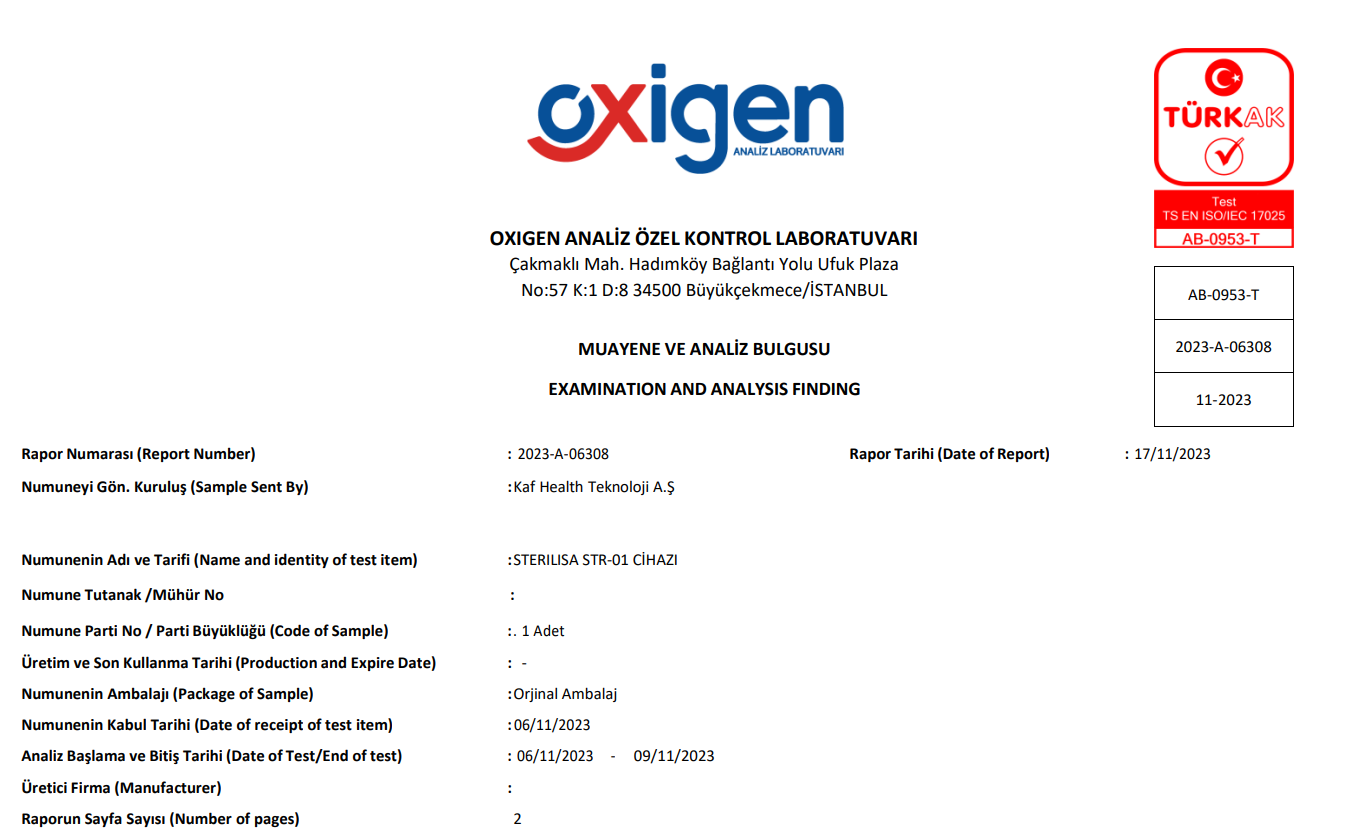
Step 2: Checking the Accreditation Number
Go to the official website of the institution that accredited the laboratory and access the accredited organization search page. The accreditation number of the laboratory is entered into the relevant box, and the search is performed. If the laboratory that prepared the report appears when we search, it means the accreditation number is valid.
You can access the TURKAK Accredited Organization Search Page via the link below:
https://asist.turkak.org.tr/tr/accreditation/accreditationagencysearch
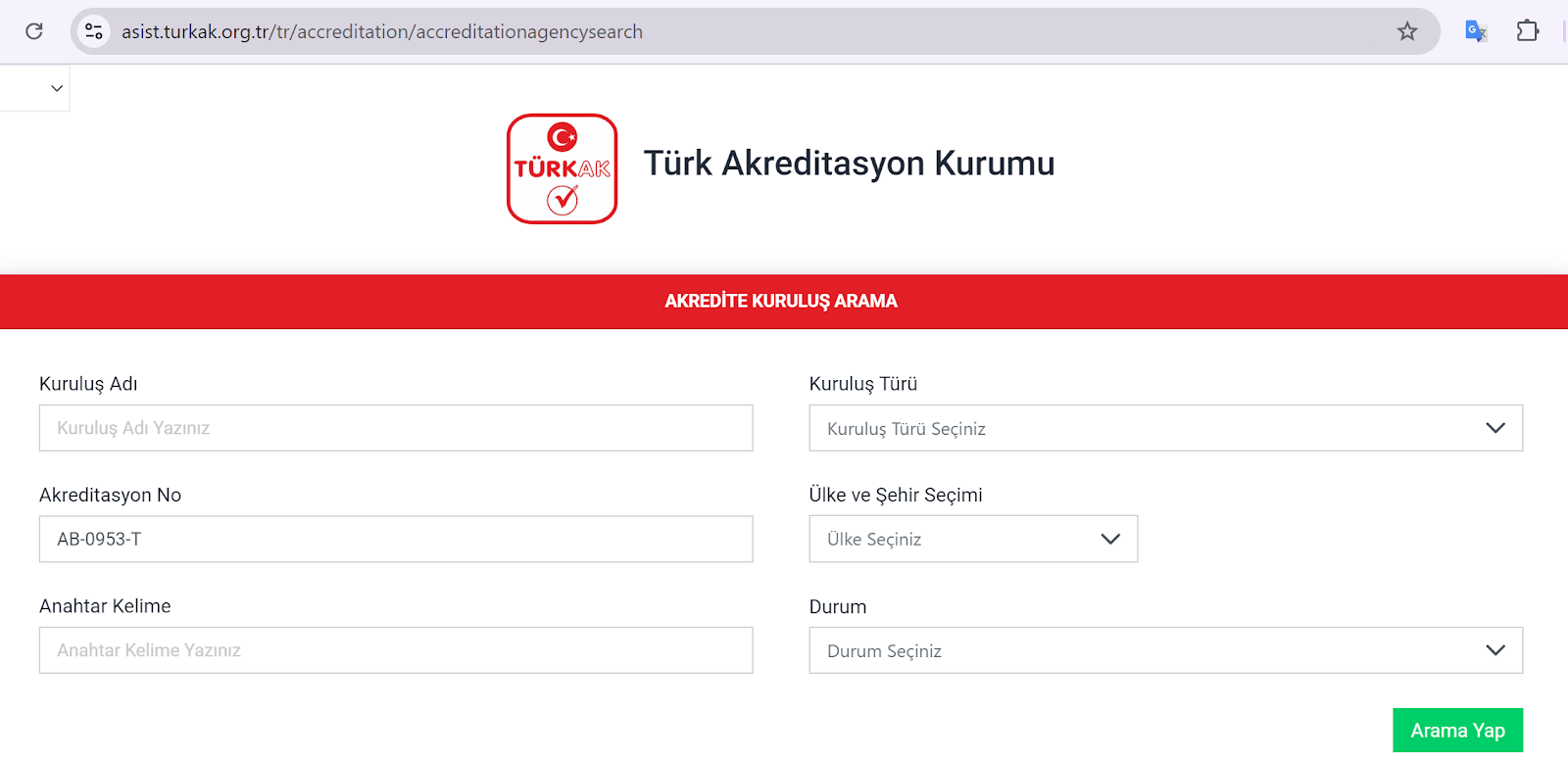
Step 3: Locating the Accreditation File
After checking the accreditation number of the laboratory that prepared the report, the laboratory's accreditation file should be found, the scope of accreditation examined, and it should be determined whether it is accredited for the analysis in the report. The file showing the laboratory's scope of accreditation appears with a visual similar to the one below when searched with the accreditation number. After searching, as shown in the image below, click on the marked area to access the laboratory's accreditation file and view it with a preview.

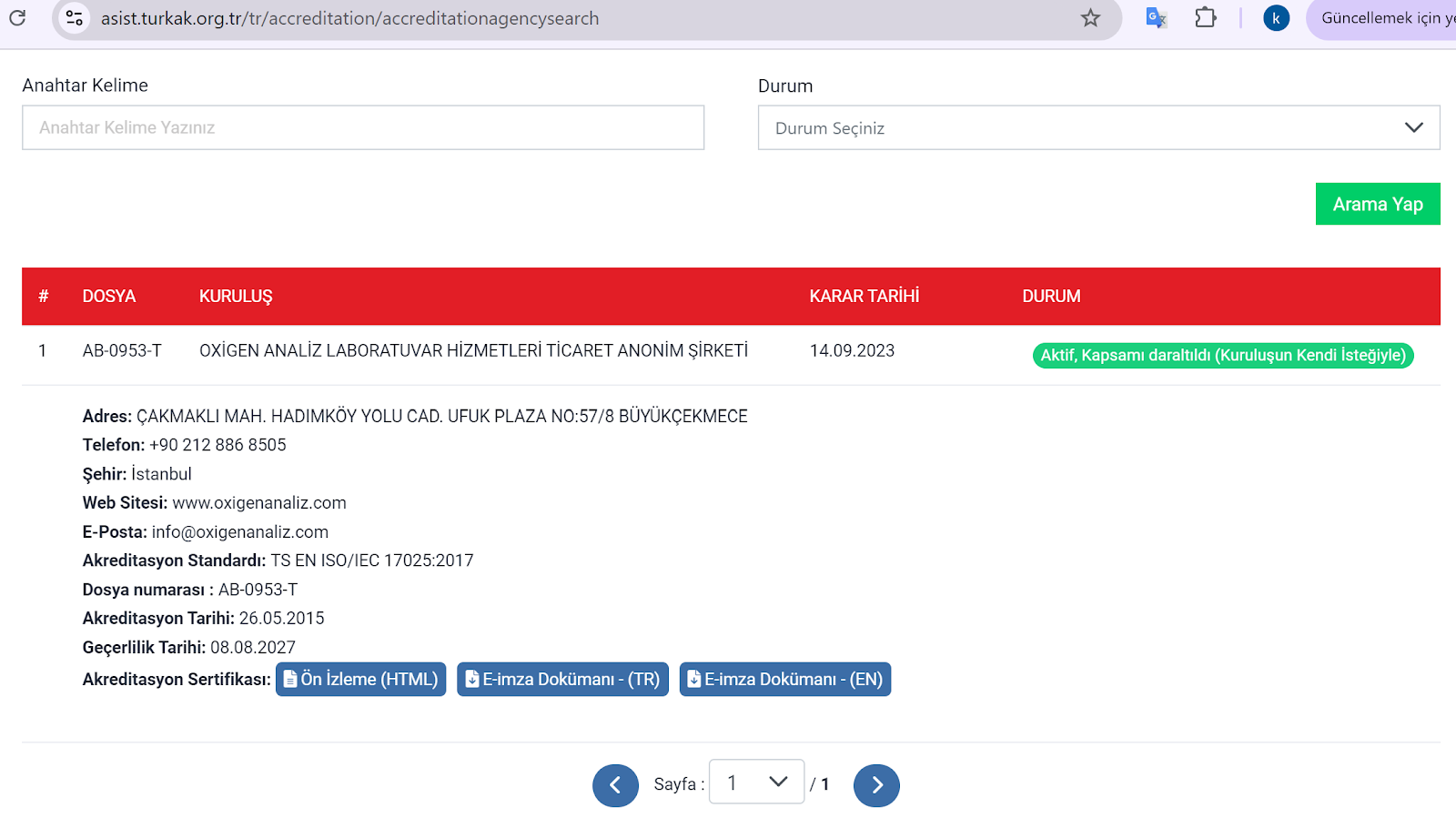
Step 4: Examining the Scope of Accreditation
From the laboratory's accreditation file, check whether it is accredited for the method of the analysis in the analysis report. To do this, open the analysis report and find the analysis method as shown in the report below. Check whether the found analysis method is present in the accreditation file.
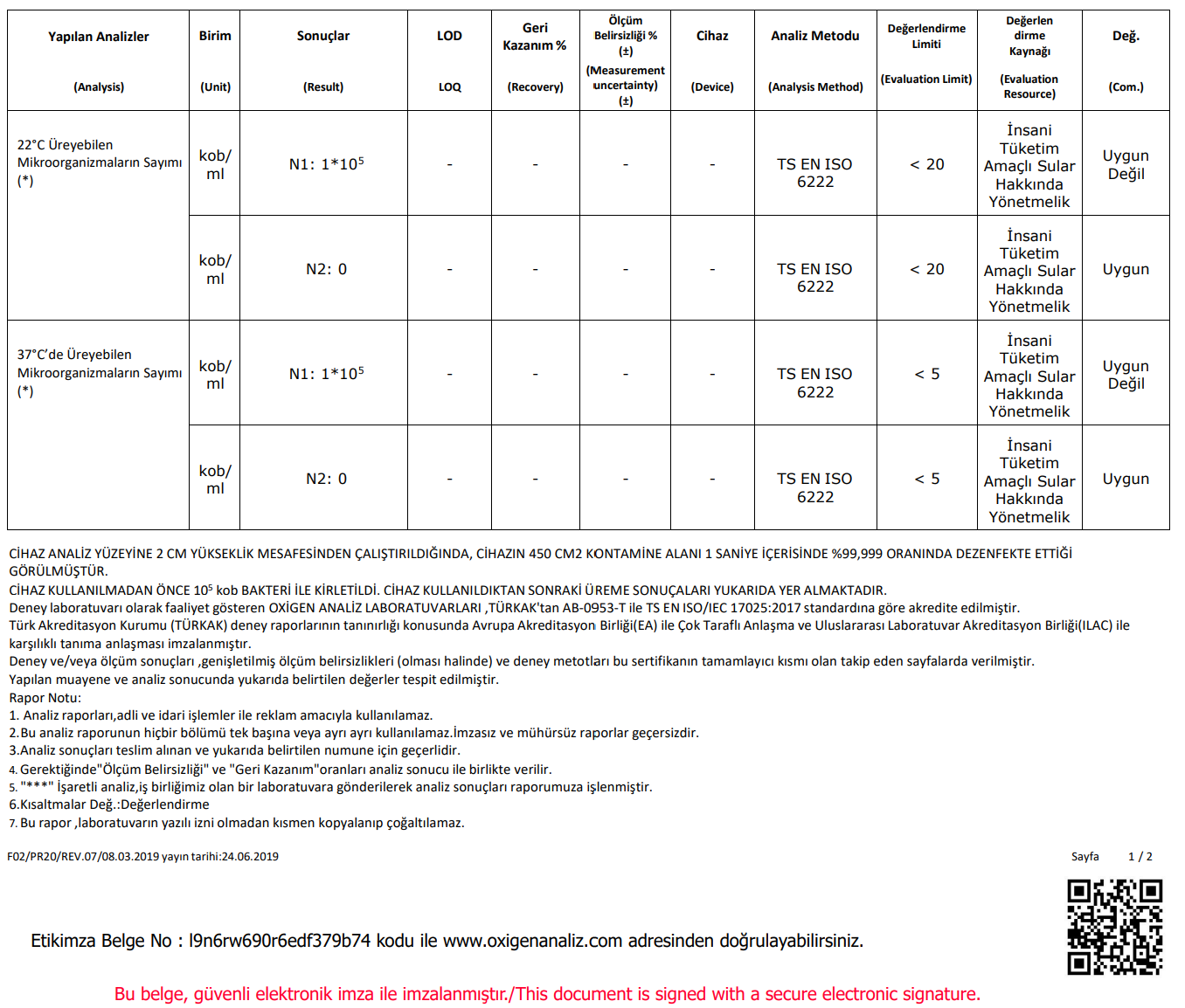

Step 5: Verification with QR Code
Whether the report has been tampered with is checked by scanning the QR code on the report.
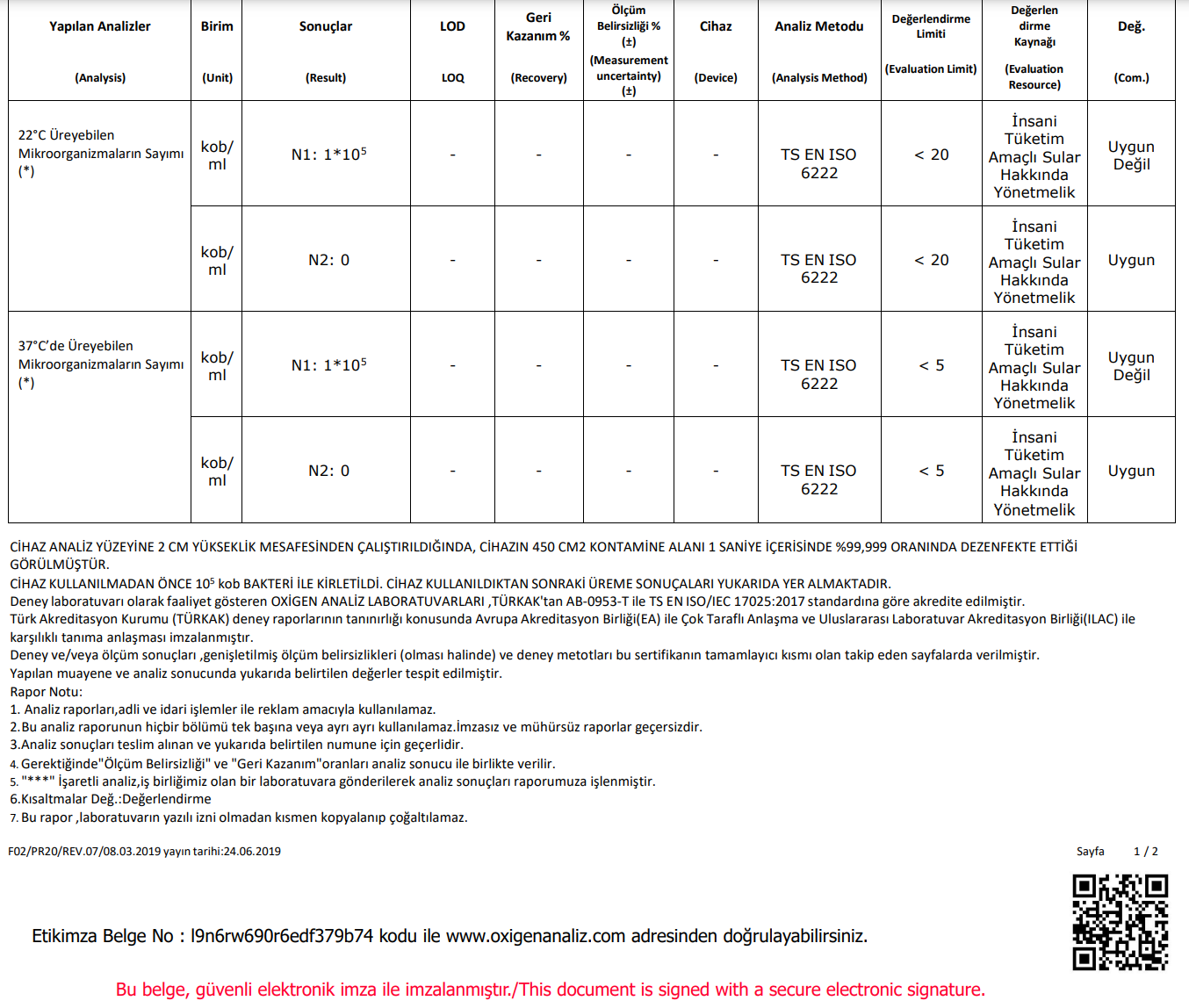
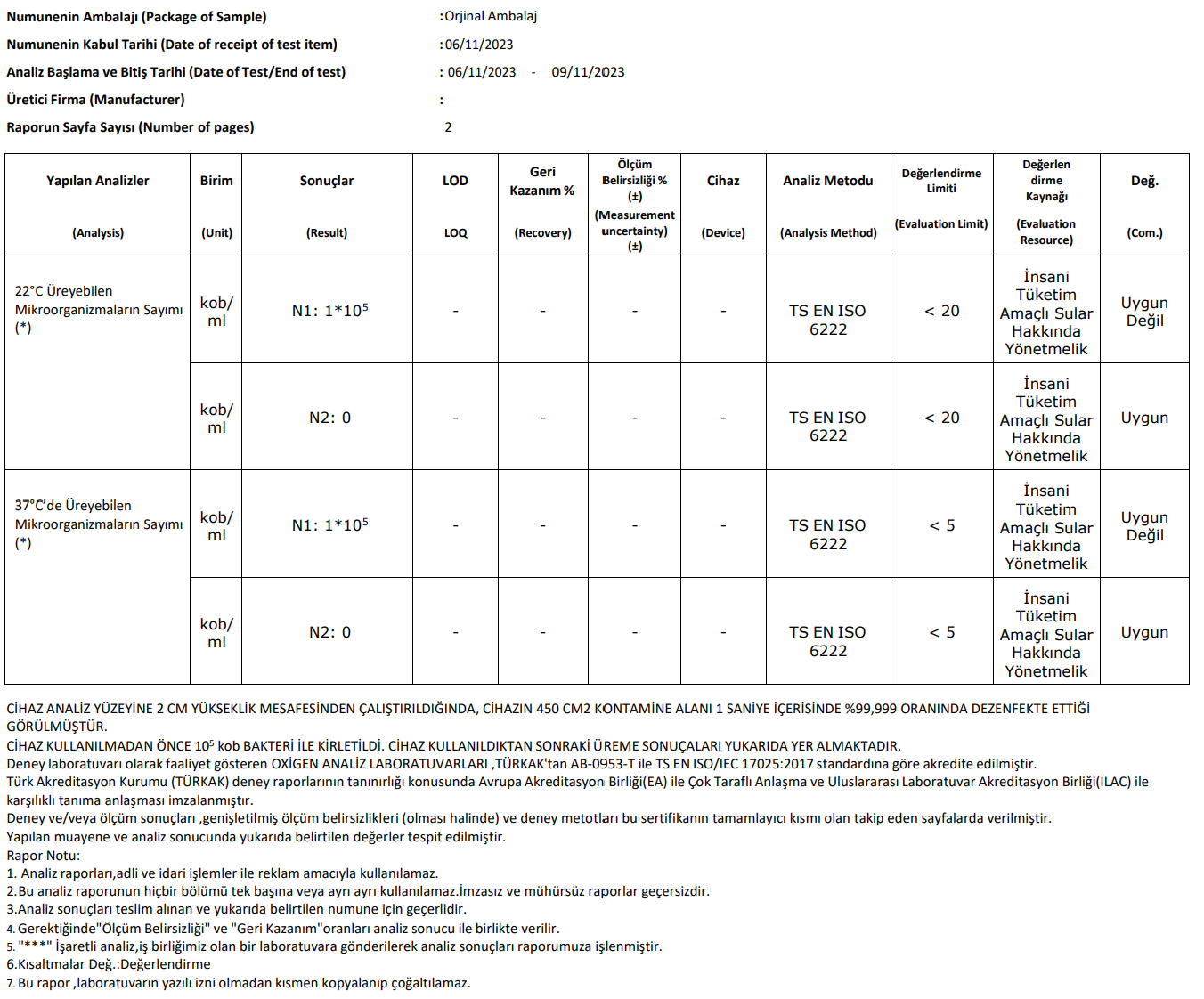
Step 6: Finding the Contact Time
The contact time is found by reading the accredited report. For example, in the report below, it is seen that the device disinfects a 450 cm2 area by 99.999% in 1 second when held 2 cm away from the surface.